
By Michael Loynd
St. Louis loves to call itself a great sports town. We should. But being a great sports town is not just about having passionate fans. It is about having institutions that bring the rest of the country here — and keep bringing them back. Few institutions do that more reliably than the St. Louis Sports Commission.
What many residents do not realize is that our Sports Commission operates with a great disadvantage to most of its peers. It is an independent nonprofit that receives virtually no recurring public funding, despite competing against cities whose sports commissions are backed by hotel taxes, state bid funds, and direct public investment.
The Sports Commission is now asking for help to scale a proven economic engine.
Over its existence, the organization has delivered a billion dollars in economic impact to our region. Since 2000, its events have generated $30 million in tax revenue for the city of St. Louis. And yet, over those 26 years, the Sports Commission has received only $75,000 from the city in total operating support.
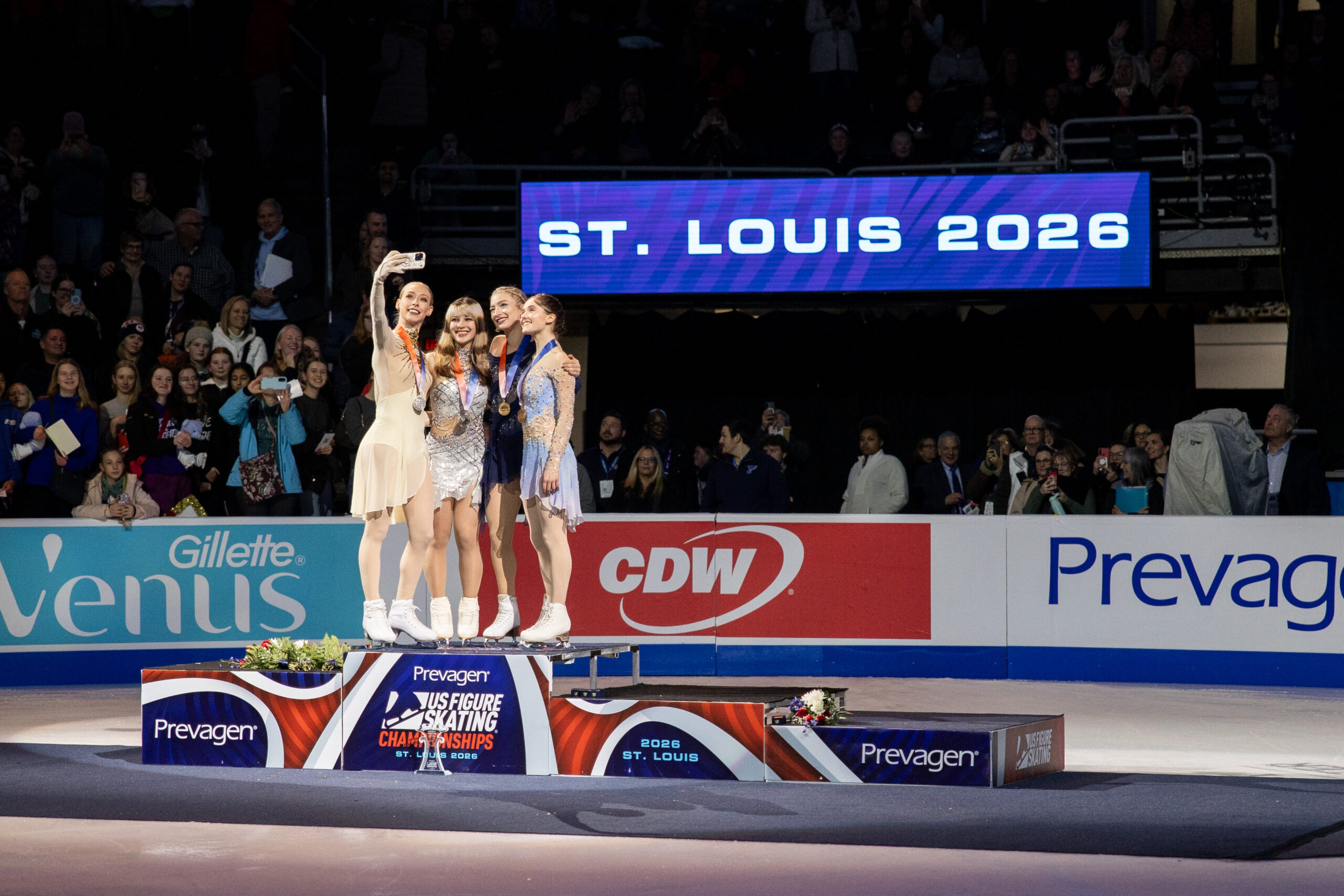
Going back to last spring, St. Louis hosted the U.S. Figure Skating Championships, NCAA Men’s Frozen Four and NCAA Men’s Basketball Tournament. The data from those three events shows how much they mean to our community:
• $35 million in direct visitor spending.
• $1.5 million in sales tax revenue for the City and a similar amount in state sales tax revenue for Missouri.
• More than 63,000 hotel room nights generating $929,000 in local lodging tax revenue.
These are not abstract numbers. They mean hotel rooms filled, restaurants packed, bars buzzing, and downtown activity. They mean millions in tax revenues. They mean jobs in hospitality, unions, and event work — including the 600 part-time workers at Enterprise Center who earned up to $1.25 million in additional wages from these three events. They mean 15 million nationwide viewers watching broadcasts tied to these events, equating to millions in free advertising promoting our city.
A fan survey conducted at the Frozen Four here revealed that more than 80% of attendees came from outside the region, and first-time visitors reported St. Louis exceeded expectations and left describing it with words like “fun,” “clean,” and “beautiful.”
And then there is the value that does not fit neatly into a spreadsheet. During the U.S. Figure Skating Championships, a St. Louis stylist, Kelsey Miller, helped Alysa Liu perfect the “halo hair” look that would go on to receive national and international attention.
That is what these events do when they work at their best: They turn local people and local businesses into part of a larger national story. They create civic pride, yes — but also visibility, reputation, and commerce.
What makes the current situation unsustainable is that St. Louis keeps asking a talented operation to overcome a structural disadvantage. Our peer cities do not treat sports recruitment as a hobby funded by goodwill and hustle alone — they invest in it.
Indianapolis annually receives about $3.5 million from a state approved sports bid fund. The recently-launched Cincinnati Sports Commission is receiving $900,000 from its public sector, including $400,000 from its city and county.
Public sources also provide significant funding for the sports event attraction entities in Cleveland, Columbus, Detroit, Houston, Louisville, Pittsburgh, and many other peer communities.
St. Louis has only begun addressing the problem. In June 2024, the city’s St. Louis Development Corporation committed $500,000 as a backstop for Sports Commission event bids if revenues fall short — a useful but modest step. A half-million-dollar rainy day fund that may never be used is not a long-term answer when competing cities routinely offer six- and seven-figure public bid packages.
That is why a one-time public investment tied to a replenishable bid fund makes sense. If St. Louis believes these events matter — and the evidence says they do — then it should start treating the Sports Commission like the economic-development partner it already is with a long-time proven return on investment.
Reasonable people can disagree about how much public money should go where, especially when St. Louis faces urgent needs elsewhere. But it is not inappropriate to argue that a small, 2% share of the city’s proceeds from the Rams settlement should help finance the next generation of sports-driven economic activity.
The city’s own Rams-settlement plan says the city received $280 million. Two percent would be $5.6 million.
The Sports Commission has asked for a one-time $5 million bid fund that would be replenished by taxes earned from its events. This ask is a sliver of the overall pool, not a raid on it. This is the minimum of what St. Louis needs to compete for events against peer cities that would still be better funded.
This is the basic choice. St. Louis can keep asking a privately funded nonprofit to outperform better-funded competitors through sheer effort. Or it can decide that if sports events bring real tax revenue, national exposure, and civic momentum, then sports attraction deserves to be treated as public economic policy.
The Sports Commission has proved its value for decades. The question now is whether the city is willing to invest accordingly.
Michael Loynd is the volunteer chair of the St. Louis Sports Commission and the executive director of the Interco Charitable Trust.